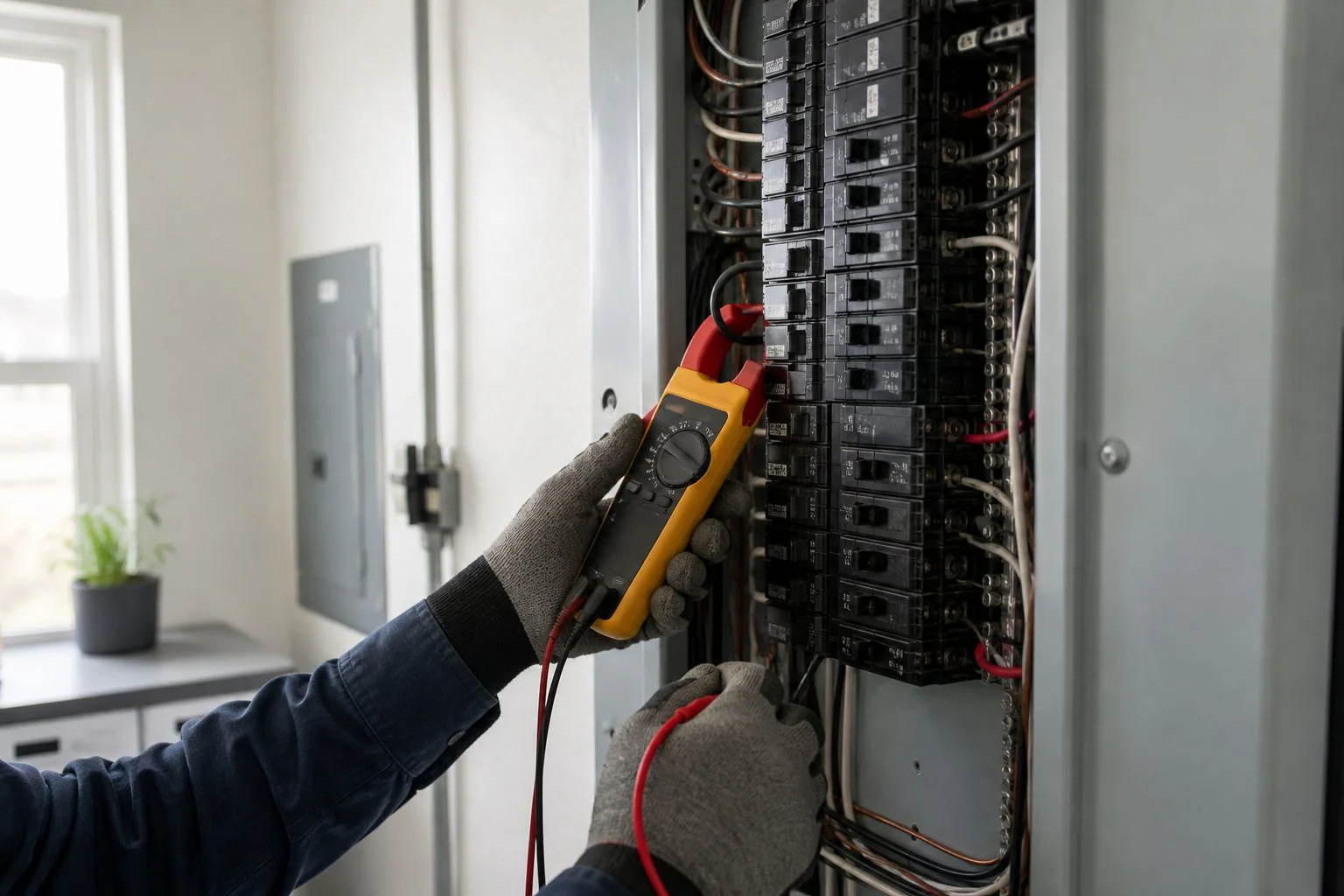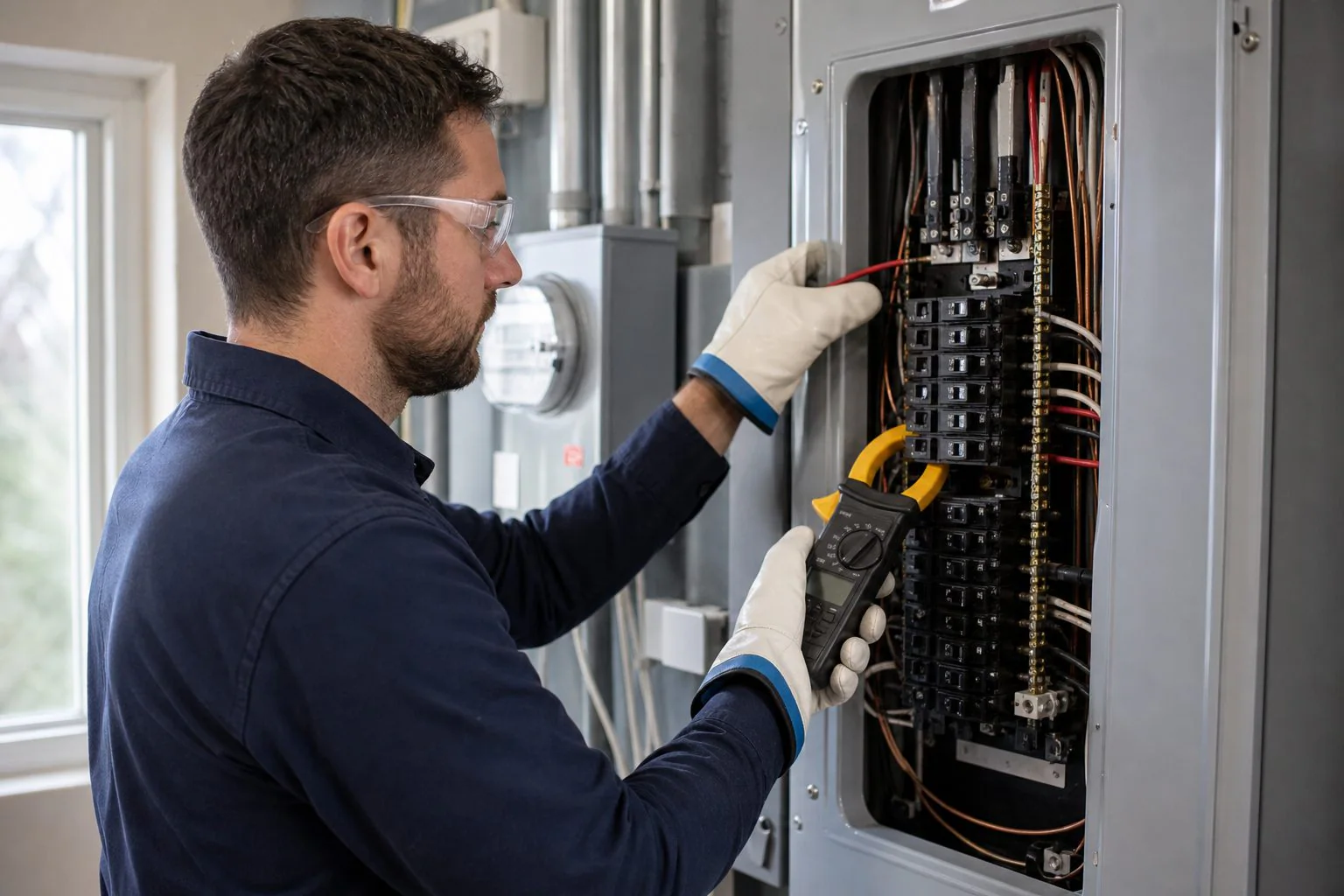
The question “How many amps for 220 volts?” does not have one fixed numerical answer. Voltage alone cannot determine amperage. You must also know the connected load’s power in watts, its resistance in ohms, or its rated current. For AC equipment, power factor and the number of phases may also affect the result.
For example, a 1,000-watt resistive appliance at 220 volts draws approximately 4.55 amps. A 2,200-watt appliance draws 10 amps, while a 5,000-watt load draws about 22.73 amps. All three operate at the same voltage but require different amounts of current.
This guide explains how to calculate amps at 220 volts for DC, single-phase AC, and three-phase AC systems. It also covers appliance ratings, circuit capacity, power factor, breaker considerations, and the common difference between 220V, 230V, and 240V.
Quick Answer: How Many Amps for 220 Volts?
You cannot convert 220 volts to amps without at least one additional value. If you know power in watts, use:
Amps = Watts ÷ 220 volts
Common examples include:
- 1,000 W at 220 V = 4.55 A
- 2,200 W at 220 V = 10 A
- 3,000 W at 220 V = 13.64 A
- 5,000 W at 220 V = 22.73 A
- 10,000 W at 220 V = 45.45 A
These results apply to DC or an ideal resistive single-phase AC load. For other AC equipment, include power factor in the calculation.
Why 220 Volts Alone Cannot Determine Amperage
Voltage and amperage describe different parts of an electrical circuit.
Voltage is the electrical potential difference that drives charge through a circuit. Amperage measures the rate of electric current. NIST describes an ampere as a measure of electric charge in motion per unit time; one ampere corresponds to one coulomb passing a point each second. NIST’s ampere introduction provides the formal measurement context.
A 220V supply does not continuously force a particular current through every connected device. The load determines how much current it draws according to its power, resistance, impedance, and operating conditions.
Consider two appliances connected to the same 220V supply:
- A 1,100 W heater draws approximately 5 A.
- A 4,400 W heater draws approximately 20 A.
The voltage is identical, but the second heater uses four times the power and draws four times the current.
This is also why a 220V outlet does not have one universal amperage. Its available circuit capacity depends on the breaker, conductors, receptacle or connection method, equipment specifications, and applicable electrical rules.
The 220 Volts-to-Amps Formula
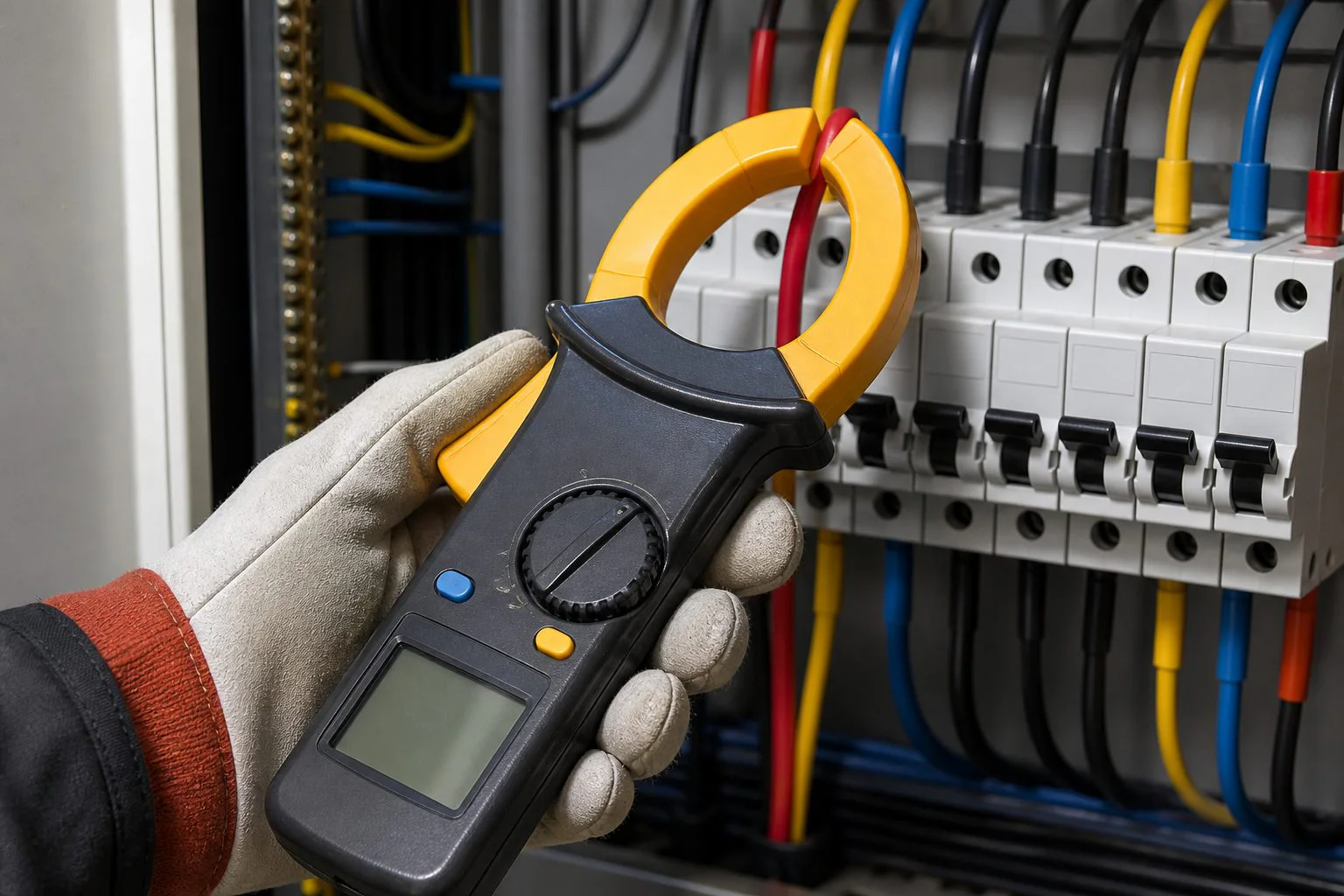
If you know watts, use a rearranged form of Watt’s Law:
P = V × I
Rearranged to solve for current:
I = P ÷ V
At 220 volts:
I = P ÷ 220
Where:
- I is current in amperes
- P is power in watts
- V is voltage in volts
Suppose a resistive appliance is rated at 1,500 W:
I = 1,500 ÷ 220
I ≈ 6.82 A
This basic 220V watts-to-amps formula works for DC circuits and resistive single-phase AC loads with a unity power factor.
Electrical Safety First also expresses the basic relationship as watts divided by volts equals amps and notes that understanding appliance current helps prevent overloaded circuits and overheating. Its amps, watts, and volts calculator demonstrates the same relationship.
220V Amperage Calculation by Wattage
The following 220 volts-to-amps conversion chart assumes DC or single-phase AC with a power factor of 1.
| Power | Calculation | Current at 220 V |
|---|---|---|
| 100 W | 100 ÷ 220 | 0.45 A |
| 250 W | 250 ÷ 220 | 1.14 A |
| 500 W | 500 ÷ 220 | 2.27 A |
| 750 W | 750 ÷ 220 | 3.41 A |
| 1,000 W | 1,000 ÷ 220 | 4.55 A |
| 1,500 W | 1,500 ÷ 220 | 6.82 A |
| 2,000 W | 2,000 ÷ 220 | 9.09 A |
| 2,200 W | 2,200 ÷ 220 | 10.00 A |
| 3,000 W | 3,000 ÷ 220 | 13.64 A |
| 4,000 W | 4,000 ÷ 220 | 18.18 A |
| 4,400 W | 4,400 ÷ 220 | 20.00 A |
| 5,000 W | 5,000 ÷ 220 | 22.73 A |
| 6,000 W | 6,000 ÷ 220 | 27.27 A |
| 7,500 W | 7,500 ÷ 220 | 34.09 A |
| 10,000 W | 10,000 ÷ 220 | 45.45 A |
The table gives calculated load current, not a recommended breaker or conductor size. Circuit design requires additional information.
Converting Amps to Watts at 220V
The calculation can also be reversed. If you know amps and want to estimate watts, use:
Watts = Volts × Amps
At 220 V:
Watts = 220 × amps
| Current | Calculation | Power at 220 V |
|---|---|---|
| 1 A | 220 × 1 | 220 W |
| 5 A | 220 × 5 | 1,100 W |
| 10 A | 220 × 10 | 2,200 W |
| 15 A | 220 × 15 | 3,300 W |
| 20 A | 220 × 20 | 4,400 W |
| 25 A | 220 × 25 | 5,500 W |
| 30 A | 220 × 30 | 6,600 W |
| 40 A | 220 × 40 | 8,800 W |
| 50 A | 220 × 50 | 11,000 W |
| 100 A | 220 × 100 | 22,000 W |
These values assume DC or a single-phase AC power factor of 1. A 220V AC load drawing 10 A at a power factor of 0.80 uses 1,760 W of real power rather than 2,200 W:
P = 220 × 10 × 0.80 = 1,760 W
Calculating Single-Phase AC Current at 220V
Single-phase power is common in homes, workshops, and small commercial properties. For a resistive load such as a basic electric heater, power factor is usually close to 1, so the basic formula may provide a reasonable result.
For AC equipment with a lower power factor, use:
I = P ÷ (V × PF)
At 220 V:
I = P ÷ (220 × PF)
Power factor, abbreviated PF, represents the relationship between real power in watts and apparent power in volt-amperes. A lower power factor means more current is required to deliver the same real power.
Consider a 2,200 W single-phase motor load at 220 V with a power factor of 0.80:
I = 2,200 ÷ (220 × 0.80)
I = 12.50 A
Without the power-factor adjustment, the result would be 10 A. That lower figure would not represent the current required under the stated conditions.
How power factor changes 220V current
| Real power | PF = 1.00 | PF = 0.90 | PF = 0.80 |
|---|---|---|---|
| 1,000 W | 4.55 A | 5.05 A | 5.68 A |
| 2,000 W | 9.09 A | 10.10 A | 11.36 A |
| 2,200 W | 10.00 A | 11.11 A | 12.50 A |
| 3,000 W | 13.64 A | 15.15 A | 17.05 A |
| 5,000 W | 22.73 A | 25.25 A | 28.41 A |
| 10,000 W | 45.45 A | 50.51 A | 56.82 A |
Use the equipment nameplate or manufacturer’s technical documentation for its rated current and power factor. Do not assume every motor or electronic device has the same PF.
Calculating Three-Phase Current at 220V
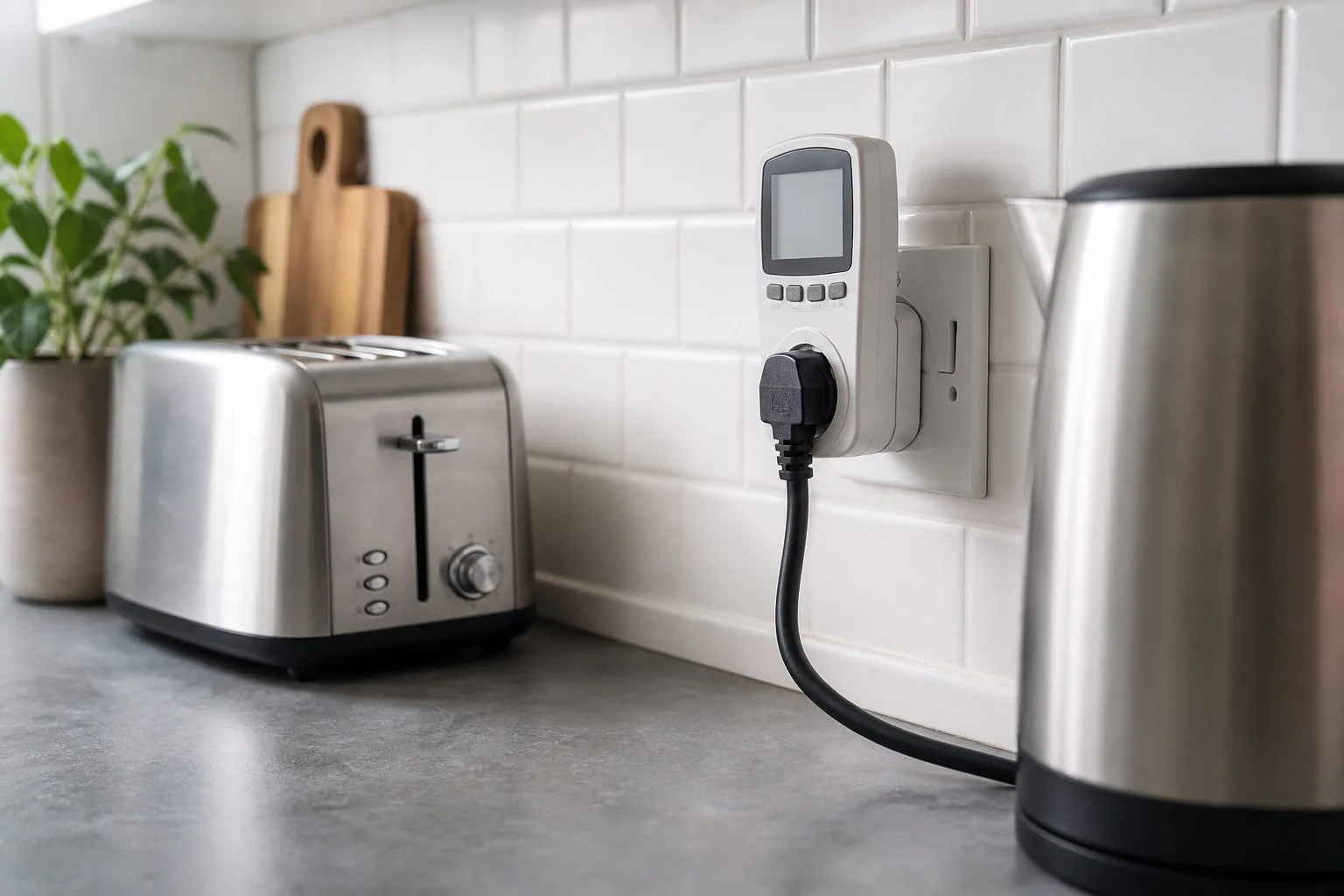
A balanced three-phase system uses a different power equation. When the stated voltage is line-to-line RMS voltage, use:
I = P ÷ (√3 × V × PF)
At 220 V:
I = P ÷ (1.732 × 220 × PF)
For a 5,000 W balanced three-phase load at 220 V with a power factor of 0.80:
I = 5,000 ÷ (1.732 × 220 × 0.80)
I ≈ 16.40 A
At a power factor of 1, the same load would draw approximately:
I = 5,000 ÷ (1.732 × 220)
I ≈ 13.12 A
220V three-phase current chart
| Total real power | PF = 1.00 | PF = 0.90 | PF = 0.80 |
|---|---|---|---|
| 1,000 W | 2.62 A | 2.92 A | 3.28 A |
| 2,200 W | 5.77 A | 6.42 A | 7.22 A |
| 3,000 W | 7.87 A | 8.75 A | 9.84 A |
| 5,000 W | 13.12 A | 14.58 A | 16.40 A |
| 7,500 W | 19.68 A | 21.87 A | 24.60 A |
| 10,000 W | 26.24 A | 29.15 A | 32.80 A |
This formula assumes total three-phase real power, a balanced load, and line-to-line voltage. If the provided voltage is line-to-neutral, the balanced-system relationship is:
I = P ÷ (3 × Vₗ₋ₙ × PF)
Never apply the single-phase equation to three-phase equipment without confirming how its power and voltage ratings are stated.
Using Ohm’s Law When Resistance Is Known
If you know resistance rather than wattage, use Ohm’s Law:
I = V ÷ R
At 220 V:
I = 220 ÷ resistance in ohms
For a resistance of 44 Ω:
I = 220 ÷ 44
I = 5 A
The corresponding power is:
P = V × I
P = 220 × 5 = 1,100 W
Here are several ideal resistive examples:
| Resistance | Current at 220 V | Power |
|---|---|---|
| 220 Ω | 1 A | 220 W |
| 110 Ω | 2 A | 440 W |
| 44 Ω | 5 A | 1,100 W |
| 22 Ω | 10 A | 2,200 W |
| 11 Ω | 20 A | 4,400 W |
Real AC equipment may have impedance rather than simple resistance. Motors, transformers, and electronic devices cannot always be modeled accurately with a basic resistance value.
How Many Amps Does a 220V Appliance Use?
The answer depends on the appliance’s rated wattage and operating behavior.
A resistive 2,000 W heater would draw approximately 9.09 A at 220 V. A 4,400 W water heater would draw about 20 A under ideal resistive conditions.
Motors and compressors require more careful treatment. Their normal current may depend on mechanical load, efficiency, and power factor. They can also draw a much higher current for a short period during startup.
A 220V air conditioner, welder, dryer, stove, pump, or EV charger should be evaluated from its nameplate and installation documentation. Do not estimate its required circuit solely from a generic appliance category or advertised output.
The nameplate may identify:
- rated voltage
- rated current
- input power
- frequency
- phase
- power factor
- motor full-load current
- minimum circuit ampacity
- maximum overcurrent protection
When rated current or minimum circuit ampacity is provided, that information is generally more useful for installation planning than a calculation based only on advertised wattage.
How Many Amps Can a 220V Circuit Handle?
A 220V circuit does not have an automatic current capacity. Its limit is determined by the installed circuit and connected equipment.
Depending on the application, a circuit might be rated at 10, 15, 20, 30, 40, 50, or more amps. Voltage does not set that rating. The breaker, conductor ampacity, terminals, receptacle or disconnect, wiring method, ambient conditions, and local rules all matter.
For example, a 220V 20 A circuit has a simple theoretical power value of:
220 × 20 = 4,400 W
That does not mean every 20 A circuit should carry a continuous 4,400 W load. Continuous-load requirements and local codes may require operating below the breaker’s full rating. Motor circuits and some fixed appliances can also follow equipment-specific rules.
Never increase breaker amperage to stop repeated tripping without identifying the cause and verifying the wiring. OSHA states that equipment should be installed and used according to its listing and labeling instructions. Its electrical standards overview also identifies electric shock, fire, electrocution, and explosion as recognized electrical hazards.
Are 220V, 230V, and 240V the Same?
The terms are often used casually to describe similar classes of higher-voltage equipment, but they should not always be treated as mathematically identical.
The US Department of Energy notes that 110–120 V at 60 Hz is used in the United States, while many countries use 220–240 V at 50 Hz. In US residential applications, the nominal service is commonly 120/240 V rather than exactly 110/220 V. The Department of Energy identifies residential service as typically 120/240 V, while commercial systems may commonly use 208/120 V or 480/277 V. DOE’s electricity guidance provides examples of these service voltages.
For a 2,200 W resistive load:
- At 220 V: 10.00 A
- At 230 V: 9.57 A
- At 240 V: 9.17 A
The differences are modest but real. Use the actual rated or measured operating voltage when accuracy matters.
Equipment labeled for a voltage range such as 220–240 V may be designed to operate across that range. Confirm this on the nameplate rather than assuming compatibility.
Does a 220V Circuit Have Half the Amps on Each Leg?
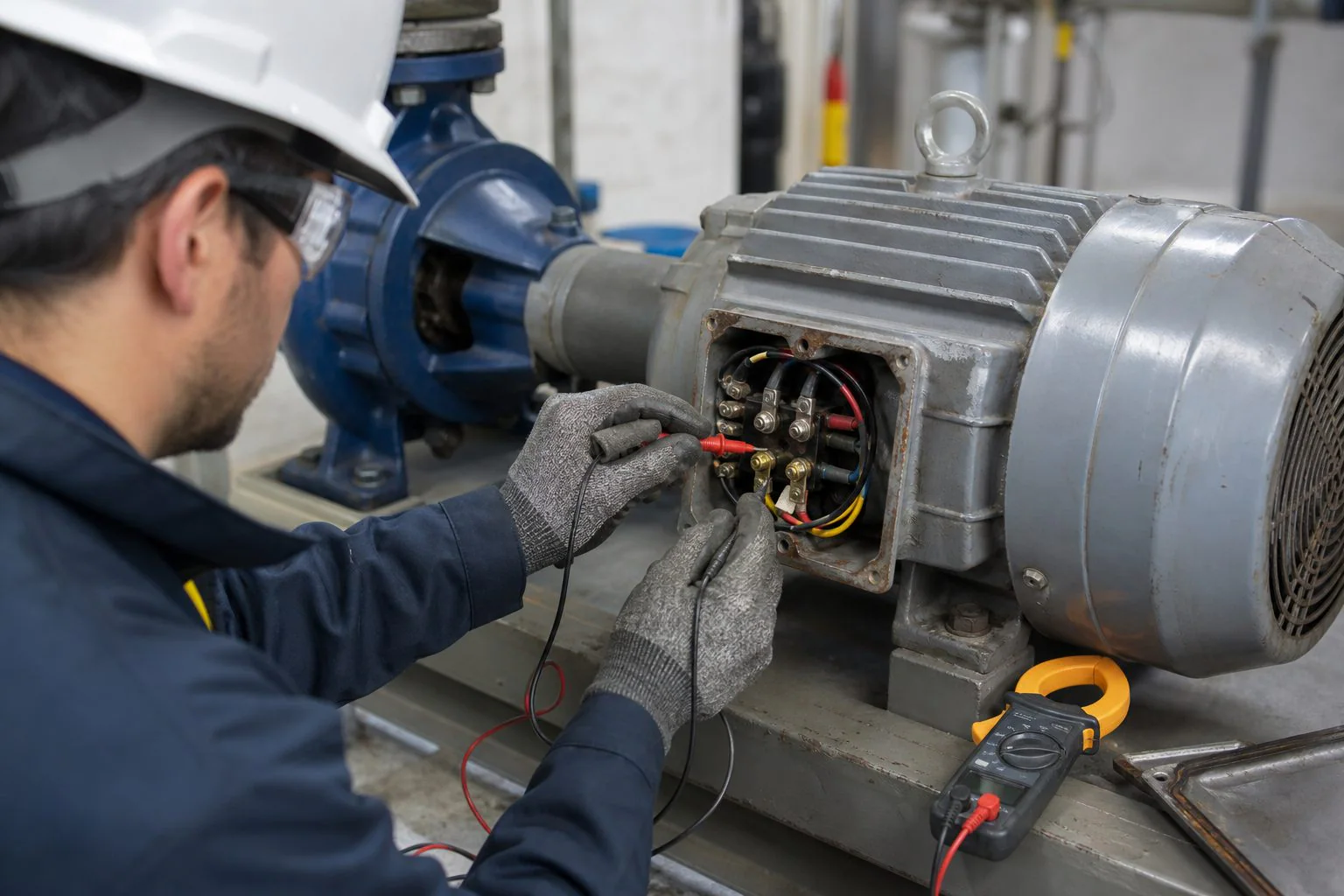
For a two-wire line-to-line load, the circuit current is not divided in half between the two conductors.
If a 220V load draws 10 A, approximately 10 A flows through each current-carrying line conductor as part of the same circuit path. It is not correct to describe that as 5 A per leg.
In a North American split-phase system, a 240V load connects across two hot conductors. Each hot conductor is about 120 V relative to neutral, but the voltage between the two is about 240 V. The neutral is generally not used by a pure line-to-line load, although some appliances need a neutral for internal 120V components.
Three-phase systems are different and require the appropriate phase formula, voltage definition, and load configuration.
Common 220V Conversion Mistakes
One common error is attempting a voltage-to-current conversion without watts or resistance. Voltage alone cannot reveal the load current.
Other mistakes include confusing watts with amps, assuming all AC loads have a power factor of 1, applying a single-phase formula to three-phase equipment, and treating 220 V, 230 V, and 240 V as exactly identical in calculations.
Readers also sometimes confuse circuit capacity with appliance current. A 30 A circuit does not force an appliance to consume 30 A. The load draws the current it requires, while the circuit must be capable of supplying and safely protecting that load.
Finally, calculated operating current should not be used as the sole basis for breaker and wire selection. Starting current, continuous operation, cable installation, ambient temperature, voltage drop, terminal ratings, and code requirements can change the design.
Frequently Asked Questions
Can voltage alone determine amps?
No. Voltage alone cannot determine current because the connected load controls how much current flows. You also need power in watts, resistance in ohms, apparent power, or a nameplate current rating. For a basic resistive load, use amps = watts ÷ volts or amps = volts ÷ resistance.
How many amps is 1,000 watts at 220V?
A 1,000 W resistive load at 220 V draws approximately 4.55 A because 1,000 ÷ 220 = 4.55. A non-resistive AC load may draw more current for the same real power if its power factor is below 1.
How many amps is 2,000 watts at 220V?
Two thousand watts at 220 V equals approximately 9.09 A for DC or a single-phase resistive AC load. At a power factor of 0.80, a single-phase 2,000 W AC load would draw approximately 11.36 A.
How many amps is 5,000 watts at 220V?
A 5,000 W load at 220 V draws approximately 22.73 A under DC or unity-power-factor single-phase conditions. At a single-phase power factor of 0.90, it draws about 25.25 A. At a power factor of 0.80, the result is approximately 28.41 A.
How many watts is 10 amps at 220V?
Ten amps at 220 V equals 2,200 W for DC or a single-phase AC load with a power factor of 1. For a load with a power factor of 0.80, the real power is 220 × 10 × 0.80, or 1,760 W.
How many amps are available from a 220V outlet?
It depends on the outlet and its circuit. A 220V connection might be supplied by a 10, 20, 30, 40, 50, or higher-amp circuit. Check its breaker, receptacle or disconnect rating, wiring, equipment instructions, and local requirements. Do not infer capacity from voltage alone.
Does power factor affect current at 220V?
Yes. For a single-phase AC load, current equals watts divided by voltage and power factor. At the same real power and voltage, a lower power factor produces a higher current. Use the equipment’s documented power factor rather than an assumed value for final calculations.
Is 220V single phase or three phase?
It can be either. A 220V supply may be single phase, split phase, or three phase depending on the electrical system and region. Check the supply configuration and equipment nameplate. Single-phase and three-phase systems use different current formulas, so phase information is required for an accurate calculation.
Use the Load Rating, Not Voltage Alone
The reliable answer to “How many amps for 220 volts?” begins with another question: what load is connected? If wattage is known, divide it by 220 for DC or an ideal resistive load. Include power factor for single-phase AC and use the √3 formula for a balanced three-phase system.
Tables and calculators are useful for estimating current, but they cannot replace the equipment nameplate or a proper electrical assessment. For breaker, conductor, receptacle, grounding, or overcurrent-protection decisions, follow the manufacturer’s instructions and have the installation checked by a qualified professional.