For anyone searching for 400kw to hp, 400 kilowatts equals approximately 536.41 mechanical horsepower. Using metric horsepower, the same power equals about 543.85 PS or CV. Under the electrical horsepower definition, it equals approximately 536.19 hp(E).
The result changes slightly because horsepower has several recognized definitions. Mechanical horsepower is the usual default for engines, vehicles and industrial equipment in the United States. Metric horsepower is still used in parts of Europe, often under the symbols PS or CV. Electrical horsepower uses a slightly different conversion factor.
The calculation itself is simple, but interpreting a 400 kW rating correctly may require knowing whether it describes electrical input, motor shaft output, generator output or an engine’s measured power. This guide explains the calculation and those practical distinctions.
Quick Answer
400 kW equals 536.4088 mechanical horsepower, normally rounded to 536.41 hp.
| Horsepower type | 400 kW equivalent |
|---|---|
| Mechanical or imperial horsepower | 536.4088 hp |
| Rounded mechanical horsepower | 536.41 hp |
| Metric horsepower | 543.8486 PS or CV |
| Electrical horsepower | 536.1930 hp(E) |
The standard mechanical conversion uses this formula:
hp = kW × 1.34102209
Substitute 400 kW:
400 × 1.34102209 = 536.408836 hp
Rounded to two decimal places:
\boxed400 kW = 536.41 hp
This is the most appropriate answer unless the specification explicitly calls for metric, electrical or another form of horsepower.
How to Convert 400 kW to Horsepower
A kilowatt equals 1,000 watts, while one mechanical horsepower equals approximately 745.6998716 watts. Dividing the watt value of one kilowatt by the watt value of one horsepower produces the conversion factor:
(1,000) ÷ (745.6998716) = 1.34102209
That means every kilowatt represents approximately 1.34102209 mechanical horsepower.
The steps for converting 400 kilowatts are:
- Start with the power value of 400 kW.
- Multiply it by 1.34102209.
- Keep the desired number of decimal places.
- Label the result as mechanical horsepower.
P_hp = P_kW × 1.34102209
Where:
- (P_{hp}) is power in mechanical horsepower
- (P_{kW}) is power in kilowatts
For 400 kW:
P_hp = 400 × 1.34102209
P_hp = 536.408836 hp
You can also divide by the number of kilowatts in one mechanical horsepower:
hp = (kW) ÷ (0.745699872)
hp = (400) ÷ (0.745699872) = 536.4088 hp
Both formulas produce the same result. Multiplying by 1.34102209 is usually quicker, while dividing by 0.745699872 shows how the conversion follows directly from the unit definitions.
Why 400 kW Can Have More Than One Horsepower Result
Horsepower is a family of units rather than one universal measurement. The differences are small for a single horsepower, but they become more visible at a rating as large as 400 kW.
Mechanical or imperial horsepower
Mechanical horsepower is commonly used for engine output, machinery and vehicle specifications in the United States. One mechanical horsepower equals approximately 745.6998716 watts.
400 kW = 536.4088 hp
This is the standard result for a general kW to hp conversion.
Metric horsepower
Metric horsepower equals 735.49875 watts. It is commonly represented by PS in Germany and some other European markets. CV, short for the French term cheval-vapeur, refers to the same metric horsepower unit.
The calculation is:
PS = (400) ÷ (0.73549875)
PS = 543.8486
Therefore:
400 kW = 543.85 PS
A European vehicle listing may consequently show about 544 PS for a powertrain rated at 400 kW, while a US-oriented listing may show about 536 hp. Neither figure is necessarily wrong. They use different definitions.
Electrical horsepower
One electrical horsepower is defined as exactly 746 watts:
hp(E) = (400) ÷ (0.746)
hp(E) = 536.1930
Thus, 400 kW equals approximately 536.19 electrical horsepower. This version can appear in electrical engineering contexts, but mechanical horsepower remains the more familiar choice for motor shaft and engine output.
Kilowatts and Horsepower Measure the Same Physical Quantity
Kilowatts and horsepower both measure power, which is the rate at which energy is transferred, produced or used. They do not measure electrical current, energy consumption or torque.
One watt equals one joule of energy transferred per second. A kilowatt contains 1,000 watts, so a 400 kW system represents a power rate of 400,000 joules per second under the SI definition.
The same rating can also be written as:
- 400 kW
- 400,000 W
- 0.4 MW
- 536.41 mechanical hp
- 543.85 metric hp
- 536.19 electrical hp
Converting between kW and hp changes only the unit used to express the power. It does not increase or decrease the actual capability of the machine.
This distinction also explains why 400 kW is not the same as 400 hp. Mechanical horsepower is a smaller unit than a kilowatt, so the horsepower number is larger:
400 hp × 0.745699872 = 298.28 kW
A 400 kW machine therefore has about 34 percent more power than a 400 hp machine when mechanical horsepower is used.
Interpreting a 400 kW Rating in Real Equipment
The arithmetic stays the same, but the meaning of the original rating depends on where it appears.
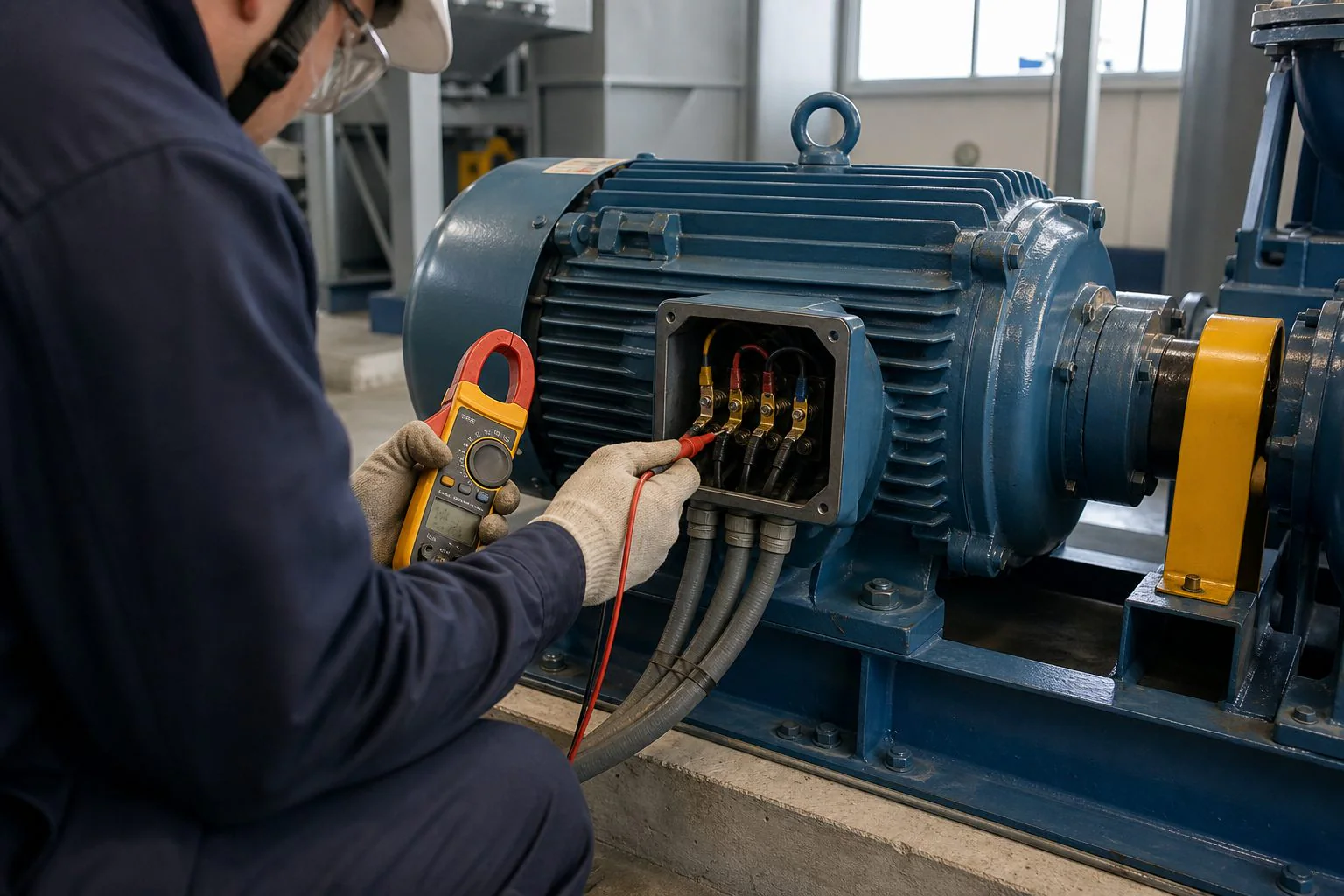
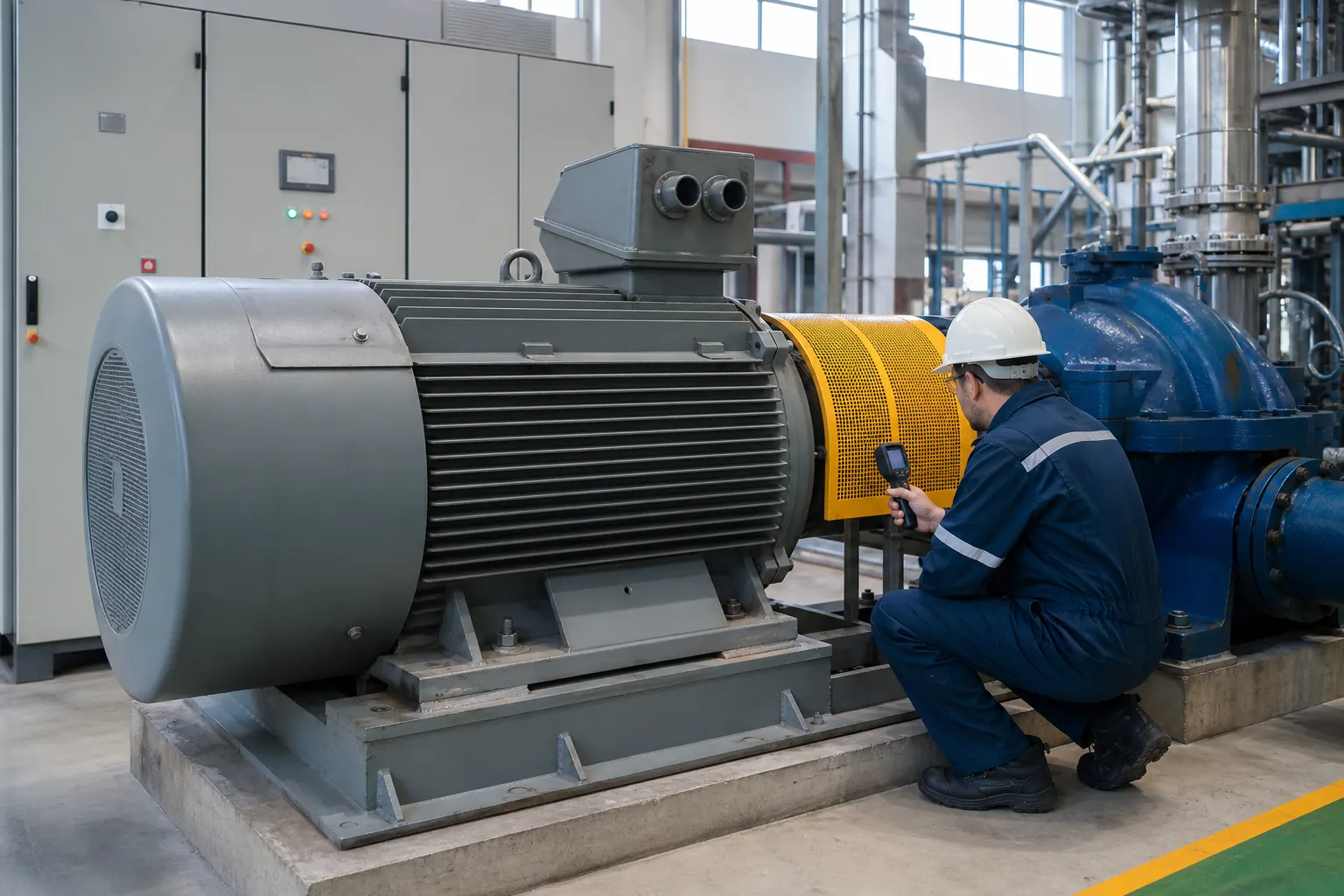
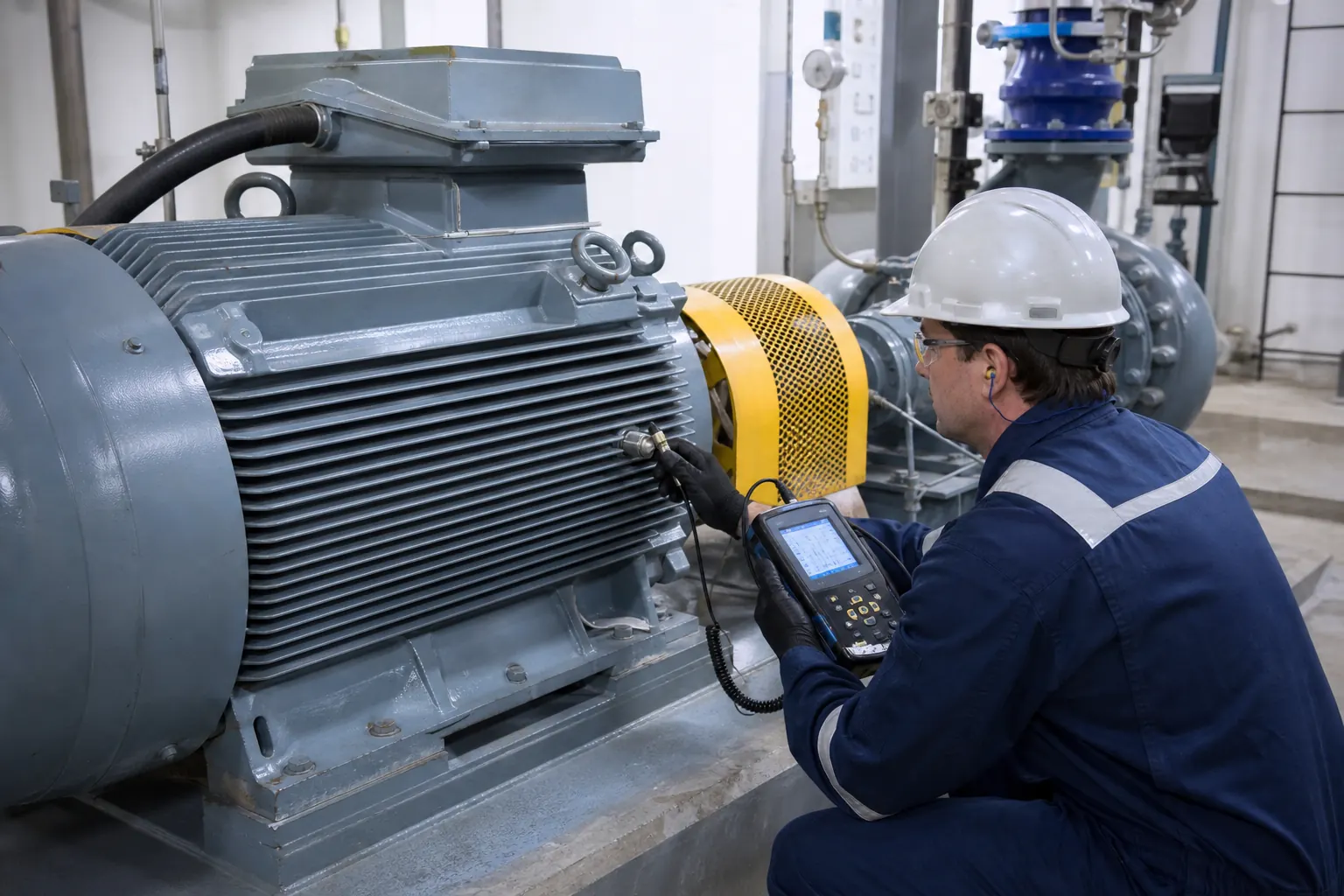
A 400 kW electric motor
An industrial motor nameplate may list 400 kW as rated mechanical output at the shaft. If that is the case, its equivalent rated output is approximately:
400 kW × 1.34102209 = 536.41 hp
A manufacturer may market it as a 535 hp, 536 hp or nearby standard-size motor depending on its product range and rounding convention.
The horsepower conversion alone does not reveal the motor’s current draw. Calculating current requires voltage, phase, power factor and efficiency. The electric motor kW to amps calculator can estimate current when those values are available. A published motor amps chart can also help with initial comparisons, although the actual nameplate current remains the better reference.
A 400 kW vehicle or EV powertrain
If a vehicle manufacturer states that a powertrain produces 400 kW, the direct mechanical equivalent is about 536.41 hp. A European specification may show roughly 544 PS instead.
Vehicle figures still need context. A 400 kW rating might describe peak power, continuous power, combined system output or power available only under certain battery, temperature and operating conditions. The unit conversion is exact, but it does not determine how long the vehicle can maintain that output.
A 400 kW generator
A 400 kW generator usually refers to its electrical output under stated operating conditions. That output equals 400,000 watts of real electrical power.
It can be expressed as 536.19 electrical hp or 536.41 mechanical hp as a pure unit conversion. However, the engine driving the generator must generally provide more than 400 kW of mechanical input because generators have losses. The engine horsepower should therefore be taken from the manufacturer’s specification instead of assuming it equals the converted electrical output.
An international equipment nameplate
Equipment made for an SI-based market may display a 400 kW rating, while documentation prepared for North America may use horsepower. Converting the value to 536.41 hp helps compare specifications, but the comparison should use the same type of rated power.
For example, comparing one motor’s shaft output with another motor’s electrical input would not be an equal comparison, even if both values are converted correctly.
Does Motor Efficiency Change the Conversion?
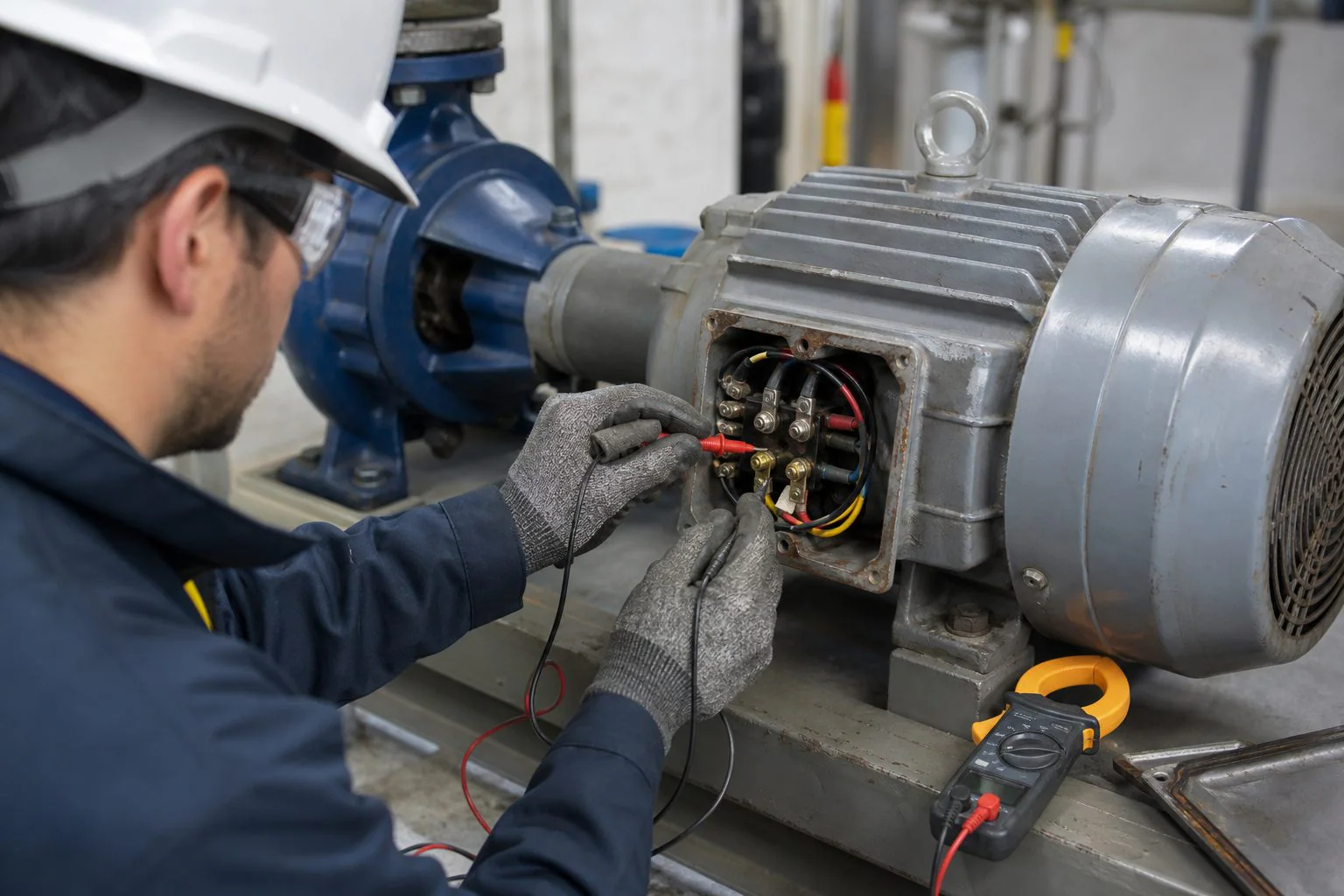
Efficiency does not affect a direct conversion from 400 kW to horsepower. If the stated power is already 400 kW, that quantity equals 536.41 mechanical hp regardless of voltage, current, power factor or efficiency.
Efficiency matters when the input and output sides are different.
Suppose a motor receives 400 kW of electrical input and operates at 95 percent efficiency:
P_output = P_input × η
P_output = 400 kW × 0.95 = 380 kW
Convert the shaft output to horsepower:
380 × 1.34102209 = 509.59 hp
In this example:
- Electrical input is 400 kW
- Mechanical shaft output is 380 kW
- Mechanical shaft output is about 509.59 hp
- The difference is lost mainly as heat, friction and other motor losses
The key is to identify what the original 400 kW figure represents. Do not apply efficiency when the nameplate already states rated mechanical output.
If you need to determine electrical power from measured current, use an amps to kW calculator. For three-phase current calculations from a known power rating, voltage and power factor, the three-phase kW to amps calculator provides the appropriate formula.
Is 400 kW the Same as 536.41 BHP?
Not automatically.
Horsepower is a unit. Brake horsepower describes where and how engine power is measured, traditionally at the engine output using a dynamometer or brake-type testing device. BHP is commonly expressed using mechanical horsepower units.
If 400 kW is confirmed as measured engine or shaft output, its numerical mechanical equivalent is about 536.41 bhp. If 400 kW describes electrical input, battery output, generator output or another point in the system, calling it 536.41 bhp may be misleading.
This is especially relevant with electric motors and generators. Converting a unit does not account for efficiency losses between electrical and mechanical parts of a system.
A careful specification should identify both:
- The unit, such as kW or hp
- The measurement point, such as electrical input, shaft output or engine crankshaft output
Without the second detail, the conversion can be mathematically correct but poorly interpreted.
Power and Torque Are Not Interchangeable
Power describes how quickly work is done. Torque describes rotational force. A 400 kW rating cannot be converted directly into newton-metres of torque unless rotational speed is known.
A useful approximate relationship is:
T(N × m) = (9550 × P(kW)) ÷ (RPM)
If a 400 kW engine produces that power at 6,000 RPM:
T = (9550 × 400) ÷ (6000)
T ≈ 636.67 N × m
At a lower speed, the torque required to produce the same power would be higher. At 1,500 RPM, for example, 400 kW corresponds to approximately 2,546.67 N·m.
This is why two engines can share the same horsepower rating while having very different torque curves and operating characteristics. Horsepower alone does not describe acceleration, pulling force or motor starting behavior.
Nearby kW to HP Conversion Values

The following values use mechanical horsepower and the factor 1 kW = 1.34102209 hp.
| Kilowatts | Mechanical horsepower |
|---|---|
| 350 kW | 469.36 hp |
| 375 kW | 502.88 hp |
| 390 kW | 523.00 hp |
| 400 kW | 536.41 hp |
| 410 kW | 549.82 hp |
| 425 kW | 569.93 hp |
| 450 kW | 603.46 hp |
These are theoretical unit conversions rounded to two decimal places. They do not account for equipment efficiency because efficiency is not part of a direct conversion between two power units.
For a quick estimate, multiply kilowatts by 1.34. For engineering documents, specification comparisons or equipment sizing, use the more precise factor and retain enough decimal places for the task.
Common Conversion Mistakes
Using the metric factor for mechanical horsepower
Multiplying 400 kW by 1.35962 produces 543.85 metric horsepower, not mechanical horsepower. Use 1.34102209 when the requested result is standard mechanical or imperial hp.
Reversing the calculation
To convert kW to hp, multiply by 1.34102209 or divide by 0.745699872. Multiplying by 0.7457 converts in the opposite direction and gives the wrong answer for this query.
Treating hp and bhp as identical in every specification
They may use the same mechanical horsepower unit, but bhp identifies measured engine or shaft output. A kW value must describe that same measurement point before it can be labeled bhp confidently.
Applying efficiency twice
Do not reduce a stated shaft-output rating by efficiency again. Apply efficiency only when moving from electrical input to mechanical output, or in the reverse direction.
Confusing kW with kWh
Kilowatts measure power. Kilowatt-hours measure energy used or produced over time. A 400 kW motor running for one hour does not become 400 kWh of power; it consumes or delivers 400 kWh of energy if it remains at that power for the full hour.
Assuming power determines current draw
A 400 kW rating alone is not enough to calculate amps. Voltage, AC phase arrangement, power factor and efficiency may all be required. The kW to amps formula explains how these variables fit into DC, single-phase and three-phase calculations.
Frequently Asked Questions
How many hp is 400 kW?
Using mechanical or imperial horsepower, 400 kW equals 536.4088 hp, normally rounded to 536.41 hp. The calculation is 400 multiplied by 1.34102209. If metric horsepower is intended, the result is approximately 543.85 PS or CV.
Is 400 kW equal to 536 hp?
Yes, when rounded to the nearest whole mechanical horsepower, 400 kW is 536 hp. The more precise result is 536.4088 hp, which rounds to 536.41 hp at two decimal places.
What is 400 kW in metric horsepower or PS?
Four hundred kilowatts equals approximately 543.8486 metric horsepower. Rounded to two decimal places, that is 543.85 PS or CV. Metric horsepower uses 735.49875 watts per unit, while mechanical horsepower uses approximately 745.6998716 watts.
What is 400 kW in bhp?
If 400 kW represents measured mechanical engine or shaft output, it is approximately 536.41 bhp. If it represents electrical input or generator output, it should not automatically be labeled bhp because efficiency and the measurement point may change the available mechanical output.
Does motor efficiency affect the 400kw to hp result?
Efficiency does not change the direct unit conversion: 400 kW always equals 536.41 mechanical hp. Efficiency matters only when 400 kW describes electrical input and you need the motor’s actual shaft output, or when shaft output is known and electrical input must be estimated.
Is 400 kW more powerful than 400 hp?
Yes. Four hundred mechanical horsepower equals approximately 298.28 kW. A 400 kW system equals about 536.41 mechanical hp, so it has considerably more power than a 400 hp system when both ratings describe comparable output.
How many watts and megawatts are in 400 kW?
There are 1,000 watts in one kilowatt, so 400 kW equals 400,000 watts. Since one megawatt contains 1,000 kilowatts, 400 kW also equals 0.4 MW.
Can I calculate amps from a 400 kW rating?
Not from power alone. You also need voltage and system type. AC calculations may require power factor, phase arrangement and motor efficiency. A three-phase 400 kW motor can draw different current at 400 V, 415 V or 480 V even though its power rating remains unchanged.
The Final 400 kW Conversion
The standard mechanical conversion is straightforward: multiply 400 kilowatts by 1.34102209. Use metric or electrical horsepower only when the specification calls for those definitions, and always check whether a real equipment rating describes input or output power.
For the standard 400kw to hp calculation:
\boxed400 kW = 536.41 mechanical hp