kW to Amps Logo
kW to Amps
Generator Sizing

Generator kW to Amps Calculator

Convert generator kilowatt ratings to amps to properly size cables and transfer switches. Supports single and three-phase generators.

Generator Load Calculator

Typical generators run at 0.8 Power Factor

kW is real output; PF changes the current estimate.

Used for kW mode; kVA mode reports apparent current without multiplying by PF.

Estimated Current Output
36.08
Amps (A)

Generator Amps Chart

Values based on PF 0.8 (Standard for Generators)

Generator kW 120V (1φ, PF 0.8) 240V (1φ, PF 0.8) 400V (3φ, PF 0.8) 480V (3φ, PF 0.8)
5 kW 52.08 A 26.04 A 9.02 A 7.52 A
10 kW 104.17 A 52.08 A 18.04 A 15.04 A
15 kW 156.25 A 78.13 A 27.06 A 22.55 A
20 kW 208.33 A 104.17 A 36.08 A 30.07 A
25 kW 260.42 A 130.21 A 45.11 A 37.59 A
30 kW 312.50 A 156.25 A 54.13 A 45.11 A
40 kW 416.67 A 208.33 A 72.17 A 60.14 A
50 kW 520.83 A 260.42 A 90.21 A 75.18 A
60 kW 625.00 A 312.50 A 108.25 A 90.21 A
80 kW 833.33 A 416.67 A 144.34 A 120.28 A
100 kW 1041.67 A 520.83 A 180.42 A 150.35 A
125 kW 1302.08 A 651.04 A 225.53 A 187.94 A
150 kW 1562.50 A 781.25 A 270.63 A 225.53 A
200 kW 2083.33 A 1041.67 A 360.84 A 300.70 A
250 kW 2604.17 A 1302.08 A 451.05 A 375.88 A
300 kW 3125.00 A 1562.50 A 541.27 A 451.05 A
400 kW 4166.67 A 2083.33 A 721.69 A 601.41 A
500 kW 5208.33 A 2604.17 A 902.11 A 751.76 A
800 kW 8333.33 A 4166.67 A 1443.38 A 1202.81 A
1000 kW 10416.67 A 5208.33 A 1804.22 A 1503.52 A

Chart values represent real kW at PF 0.8. A kVA nameplate should be entered in kVA mode above; it is not the same as kW at PF 0.8.
Page intent

Generator nameplates commonly lead with kVA, while loads are often discussed in kW. This page separates apparent capacity from real output so a user can choose the correct input mode and avoid treating PF 1.0 single-phase numbers as PF 0.8 generator ratings.

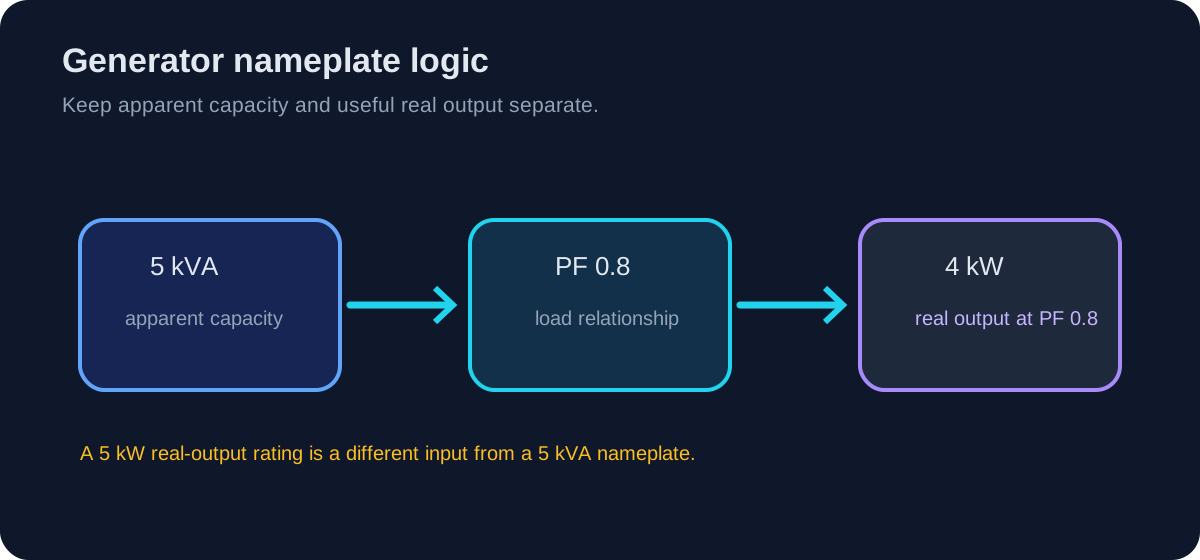
Generator diagram showing kVA apparent capacity, power factor, and kW real output

kW rating and kVA rating answer different questions

A generator rated 5 kVA can supply 5,000 VA of apparent power. At PF 0.8 that represents 4 kW of real power. A generator described as 5 kW real output must be evaluated with the generator’s rated PF and voltage to find current.

At 240 V single-phase, 5 kW real power at PF 0.8 is 26.04 A. A 5 kVA apparent-power rating at 240 V is 5,000 / 240 = 20.83 A; it is not the same scenario.

Corrected chart assumptions

The generator chart now uses PF 0.8 consistently in every displayed column, including the 120 V and 240 V single-phase values. Enter a real kW rating when you know the engine-generator set’s real output; enter kVA when the nameplate is apparent power.

  • 5 kW real at 240 V, PF 0.8: 26.04 A.
  • 5 kVA at 240 V: 20.83 A apparent current.
  • 5 kVA at PF 0.8: 4 kW usable real power.

Operating limits beyond the arithmetic

Continuous, prime, and standby ratings describe different duty cycles. A motor-starting surge, load step, voltage regulation response, altitude, temperature, nonlinear current, and harmonics can all reduce practical headroom even when the steady-state kW appears acceptable.

Transfer equipment, earthing or bonding configuration, cable routing, and backfeed prevention are installation matters. A calculator cannot verify a safe transfer switch or generator connection.

Reading a nameplate before using the calculator

Record whether the nameplate says kW or kVA, the phase count, L-L or L-N voltage, PF basis, duty rating, and any derating notes. If the generator is supplying motors, include starting requirements separately rather than hiding them in a larger PF guess.

Continue with the right context

Page-specific FAQs

Should I enter generator kW or kVA?

Enter the unit shown on the nameplate. If it is kVA, do not silently treat it as kW; use PF to estimate the available real kW.

Why is PF 0.8 common on generator discussions?

Many generator ratings are historically expressed at a 0.8 power factor, but the exact nameplate and application determine the valid assumption.

Does the result include motor-starting surge?

No. The steady-state result does not model locked-rotor current, acceleration time, or load-step response.

What is the difference between standby and continuous output?

Standby is for limited outage duty; continuous or prime ratings support longer or variable duty. Use the manufacturer’s rating definitions, not a generic multiplier.

Does altitude reduce generator capacity?

Often yes. Engine air density, ambient temperature, cooling, and alternator limits can require derating, so check the manufacturer curve.